Digite sua busca e pressione enter


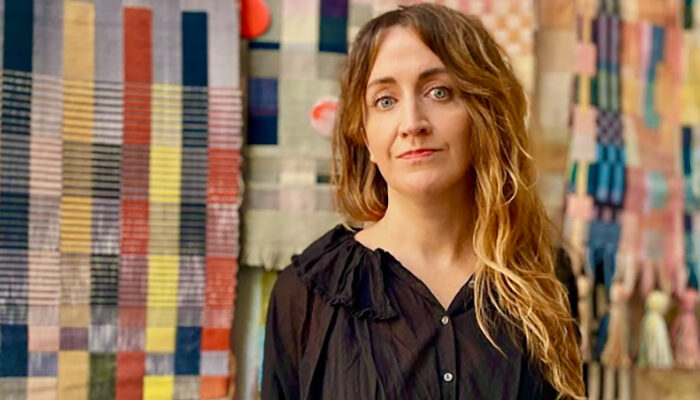
Como a tecelagem entrou na sua vida? Conte-nos brevemente sua história.
Só descobri a tecelagem quando tinha 40 anos. Estudei arte e fotografia na faculdade e trabalhei em administração de artes por anos. Sempre tive hobbies artesanais — tricô, costura e coisas do tipo — e me deparei com um tutorial online sobre como fazer uma tapeçaria de parede em um tear de moldura e tentei. Fiquei viciada! Existem tantos recursos online que foi muito fácil aprender diferentes tramas e técnicas. Depois de tecer em um tear de moldura, comprei um tear de liço rígido e experimentei por um ano. Depois, fiz algumas aulas para aprender a tecer em um tear de chão e, por fim, comprei um tear de chão de uso doméstico. Durante a pandemia, minha família e eu ficamos em nossa casa no lago em Wisconsin por um ano. Tive MUITO tempo para tecer e também comecei a explorar corantes naturais de plantas. Aquele ano foi realmente transformador — experimentei muito no tear e foi quando comecei a criar as tramas duplas multicoloridas e tingidas à mão que faço hoje.
Em que horas do dia você tece?
Eu costumo tecer durante o dia, mas faço qualquer trabalho de acabamento (como tecer pontas soltas) à noite enquanto assisto TV.

Quais são suas influências no desenvolvimento do seu trabalho?
Meu trabalho é definitivamente influenciado por outros artistas e tecelões, do passado e do presente. Quando sou atraída por uma peça, tento descobrir o que ela me transmite, o talvez o uso de cor, textura ou um padrão específico e então tento reinterpretar isso com minha própria voz.
Quais foram os principais desafios que você enfrentou ao longo de sua experiência com a tecelagem?
Às vezes, ser autodidata pode ser um desafio, pois não tenho a profundidade de compreensão sobre estruturas de trama e desenho que outros aprenderam na escola. Mas às vezes não saber as regras também ajuda no processo criativo e eu crio novas maneiras de fazer as coisas.

Como você lida quando um trabalho dá errado?
Se estou apenas criando algo para mim e não está funcionando, transformo a peça em uma amostra e experimento combinações de cores e padrões que posso incorporar em uma peça futura.
Se estou trabalhando em uma encomenda e algo não está indo bem, desfio muito! Houve momentos em que desfio horas de trabalho e começo de novo.
Onde você busca inspiração?
Em todos os lugares — livros, natureza, moda. Sempre me inspiro depois de um dia em um museu.

O que você gostaria de aprender no mundo têxtil?
Às vezes, gostaria de tentar tecer em um tear Jacquard digital.
Diga-nos, no mundo têxtil, quem você admira?
Claro que há os clássicos: Anne Albers, Sheila Hicks e Gunta Stolzl. Minhas tecelãs favoritas que sigo no Instagram são Susie Taylor, Christy Mason, Astrid Skibsted, Sarah Sherrod e Meghan Spielman. Admiro e sou muito inspirada pelo trabalho deles.

O que não pode faltar na sua caixa de tecelagem?
Algodão 8/4, corantes da botanicalcolors e audiolivros!
Que conselho você daria para uma novata?
Experimente e experimente! Sempre que sobra espaço no final de uma urdidura, eu brinco. É um ótimo momento para experimentar novas cores, diferentes pesos e tipos de fios e brincar com o padrão em si.

INGLÊS
How did weaving come into your life? Tell us briefly your story.
I didn’t find weaving until I was 40. I studied art and photography in college and worked in arts administration for years. I always had crafty hobbies—knitting, sewing and such—and I came across a tutorial online about making a wall hanging on a frame loom and I gave it a try. I was hooked! There are so many online resources, it was really easy to learn different weaves and techniques . After weaving on a frame loom, I bought a rigid heddle loom and experimented on that for a year. I then took some classes to learn how to weave on a floor loom and eventually bought a used floor loom for my house. During the pandemic, my family and I stayed at our lake house in Wisconsin for a year. I had A LOT of time to weave and I also started exploring natural plant dyes. That year was really transformative—I experimented a lot on the loom and that’s when when I started creating the multicolor, hand dyed doubleweaves that I make today.
What time of day do you weave?
I usually weave during the day but will do any finishing work (like weaving in loose ends) at night while watching TV.
What are your influences on the development of your work?
My work is definitely influenced by other artists and weavers, past and present. When I’m drawn to a piece, I try to figure out what about it is speaking to me—maybe the use of color or texture or a particular pattern and then I try to reinterpret that in my own voice.
What were the main challenges you experienced throughout your experience with weaving?
Sometimes being self-taught can be a challenge as I lack the depth of understanding about weave structures and drafting that others learned in school. But sometimes not knowing the rules also helps in the creative process and I come up with new ways for doing things.
How do you deal when a job goes wrong?
If I’m just creating something for myself and it’s not working, I turn the piece into a sampler and experiment with color combos and patterns that I might incorporate into a future piece.
If I’m working on a commission and something is not going right, I do a lot unweaving! There have been times where I will unweave hours of work and start over.
Where do you look for inspiration? Everywhere—books, nature, fashion. I’m always inspired after a day at a museum.
What would you like to learn in the textile world?
Sometime I’d like to try weaving on a digital Jacquard loom.
Tell us, in the textile world, who do you admire? There are of course the classics: Anne Albers, Sheila Hicks and Gunta Stolzl. My favorite weavers I follow on instagram are Susie Taylor, Christy Mason, Astrid Skibsted, Sarah Sherrod and Meghan Spielman. I admire and am so inspired by their work.
What can’t be missing from your weaving box? 8/4 cotton, dyes from botanicalcolors and audio books!
What advice would you give to a beginner? Sample and experiment! Whenever I have leftover space at the end of a warp, I play around. It’s a great time to try out new colors, different weights and types of yarn and mess around with the pattern itself.
Crédito de imagens: @lori_seidemann


Qual é sua técnica de bordado? Sou uma artista contemporânea de fibras que trabalha com fios e fibras para criar imagens e obras de arte texturizadas. Costumo usar uma abordagem de mídia mista pintando linho, tingindo fios, lãs e tecidos, bem como colagens e trazendo elementos encontrados, como contas e joias vintage desconstruídas. Também enrolo, […]

